
🎯 The Big Picture
China just made a major move in AI-for-science. The Chinese Academy of Sciences (CAS) unveiled ScienceOne 100—a suite of 100+ domain-specific AI models built on a scientific foundation model—designed to accelerate discovery across mathematics, physics, biology, and beyond. It's a clear signal that AI-driven research is transitioning from isolated experiments to coordinated, platform-based innovation.
📖 What Happened
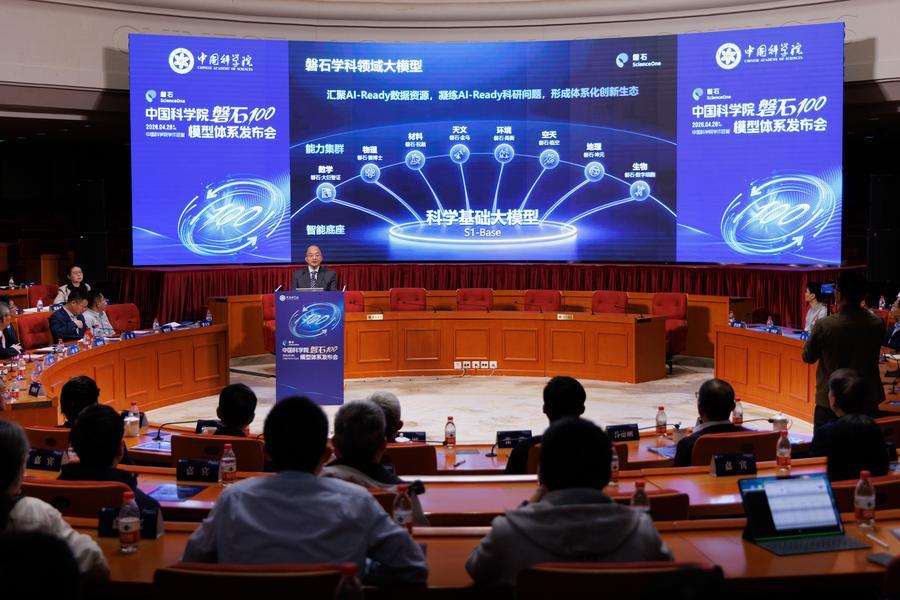
At a launch ceremony in Beijing on April 28, 2026, CAS revealed ScienceOne 100, built atop the scientific foundation model ScienceOne. The system clusters multidisciplinary domain-specific large models, each tuned for a branch of science.
Unlike general-purpose LLMs, ScienceOne is designed specifically for the research workflow: reading literature, evaluating innovations, and running agent-based experiments.
💰 By the Numbers
| 📊 Metric | 💡 Context |
|---|---|
| 100+ | Domain-specific models in the ScienceOne 100 suite |
| 3 | Core functions: literature compass, innovation evaluation, agent factory |
| Multiple | Scientific domains covered: math, physics, biology, and more |
| 1 | Unified platform replacing fragmented research tools |
🎤 Highlights
• ScienceOne provides literature compass for navigating massive research corpora
• Innovation evaluation helps assess novel ideas against existing knowledge
• Agent factory enables autonomous experimental design and execution
• Marks transition from isolated AI experiments to collaborative platform science
• Built by China's top research institution, signaling state-level AI investment
💬 In Their Words
"This marks a transition in AI-driven scientific research from fragmented and isolated exploration toward collaborative, efficient and platform-based innovation."
— Chinese Academy of Sciences announcement
🚀 Why It Matters
ScienceOne 100 represents a different philosophy from Western frontier labs. While OpenAI and Anthropic race on general reasoning and coding, China is applying AI directly to scientific discovery at the national level. The platform approach—unifying literature review, idea evaluation, and experimental agents—could compress research timelines from years to months.
For the global scientific community, this raises both opportunity and competitive pressure. Collaborative, AI-accelerated science is no longer theoretical—it's being deployed at scale.
⚡ The Bottom Line
China's ScienceOne 100 shows that the next AI frontier isn't just chatbots or coding agents—it's autonomous scientific discovery. The country that masters AI-for-science will shape the next century of human knowledge.
📰 Source: Xinhua / Chinese Academy of Sciences 🔗